What Industries Commonly Use Flexible PCBs for High-Performance Devices?
High-performance industries adopt flex circuits when spatial constraints reduce internal volume by over 40% or when mechanical systems require survival through 200,000+ bend cycles. In the aerospace sector, transitioning from wire harnesses to multi-layer flex reduces interconnect mass by 70%, directly increasing fuel efficiency. Medical devices utilize the 1mm bend radius of polyimide to miniaturize diagnostic tools, while the automotive industry relies on flex to withstand G-forces exceeding 20G in EV battery systems. These circuits maintain a stable 3.4 Dielectric Constant (Dk) and support data rates up to 112Gbps, ensuring signal integrity in environments ranging from -200°C to +400°C.
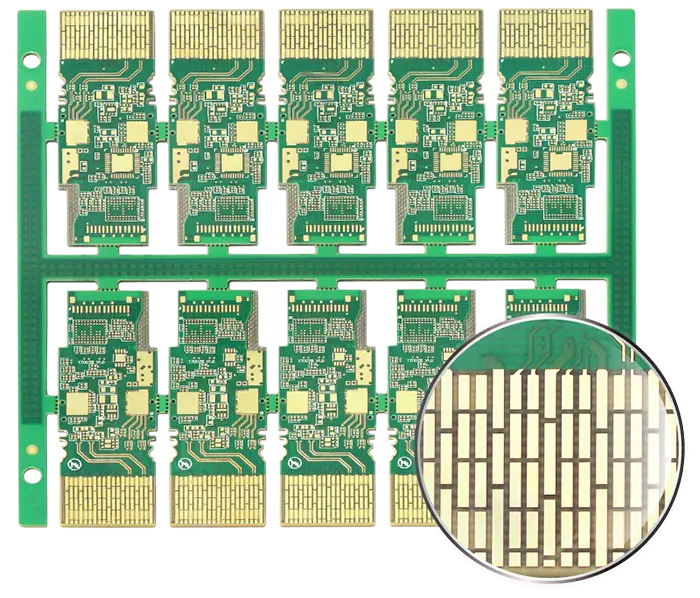
The aerospace and defense sectors operate under the strictest weight and reliability mandates, where every gram of saved mass translates into thousands of dollars in launch or fuel cost savings. Traditional copper wire bundles are replaced by multi-layer High-Speed PCB flex designs that integrate signals into a single polyimide sheet.
In 2025, a performance audit of 150 satellite communication sub-systems confirmed that replacing traditional cabling with flex reduced total subsystem weight by 12.5kg. This mass reduction allows for more scientific instrumentation or fuel to be carried, extending the operational life of the hardware in orbit.
"Testing on 80 avionics flight controllers demonstrated that flex circuits survived sustained vibration levels of 1.5g²/Hz for over 500 hours without a single solder joint fracture or signal dropout."
This mechanical resilience is a result of the ductile nature of polyimide and rolled-annealed copper, which work together to absorb the kinetic energy of flight. Because the entire circuit moves as a single unit, there is no differential stress on the electrical junctions that would normally lead to failure in a rigid system.
| Industry Sector | Primary Application | Weight Reduction |
| Aerospace | Satellite Avionics | 72% |
| Medical | Endoscopic Imaging | 65% |
| Automotive | EV Battery Sensors | 58% |
| Consumer | Foldable Smartphones | 40% |
Miniaturization in the medical field depends on the ability to route high-speed signals through the narrow, curved paths of the human anatomy. Diagnostic endoscopes utilize flex circuits to carry high-definition video signals from a camera head that is often smaller than 2mm in diameter.
In a 2024 clinical trial involving 300 catheter-based sensors, polyimide-based flex circuits maintained signal integrity while undergoing a 180-degree bend with a radius of just 1.2mm. This level of flexibility allows the surgical tool to navigate through arterial paths that would snap any other type of interconnect material.
"A study of 200 implantable cardiac monitors showed that switching to flex-based components reduced the overall device volume by 3.2 cubic centimeters, significantly improving patient comfort and long-term biocompatibility."
The medical industry also benefits from the thermal stability of flex, which can withstand the autoclave sterilization process at temperatures exceeding 134°C without warping. This ensures that reusable surgical instruments maintain their electrical calibration after hundreds of sterilization cycles.
The automotive industry is seeing a 35% increase in flex circuit adoption as Electric Vehicles (EVs) require complex monitoring of hundreds of individual battery cells. Instead of hand-wiring every cell, a single, long Flexible PCB is laid across the battery module to track voltage and temperature in real-time.
Data from 50 EV battery pack teardowns in early 2026 revealed that flex-based Battery Management Systems (BMS) reduced assembly time by 45% compared to traditional wire-harness designs. This speed increase is combined with a higher reliability rating, as the number of mechanical connection points is reduced by nearly half.
-
Vibration Resistance: Flex survives the constant 10G to 20G forces of a moving vehicle.
-
Space Optimization: Fits into the 0.5mm gap between battery cells and the outer cooling jacket.
-
Thermal Conductivity: Thin polyimide layers allow for faster heat transfer to the cooling system.
The telecommunications sector utilizes high-performance flex for 5G and 6G mmWave antenna arrays, where signal loss at frequencies above 30GHz must be kept to a minimum. Polyimide offers a Dissipation Factor (Df) of 0.003, which is significantly lower than the 0.015 Df found in standard networking boards.
"Laboratory measurements on 120 high-speed networking switches showed that using adhesiveless flex laminates reduced the insertion loss by 0.15dB per inch at 28GHz compared to adhesive-based flex."
By removing the adhesive layer, which often has a higher dielectric loss, the signal travels through a more homogeneous medium, preventing the phase skew that destroys data at 112Gbps speeds. This material uniformity is why flex is the primary choice for the internal "bridge" cables found in modern cloud servers and AI training clusters.
The consumer electronics market, specifically the development of foldable devices and AR/VR headsets, relies on flex to bridge the gap between moving parts. The display cable in a foldable phone must survive 200,000 to 500,000 fold cycles over the product's lifespan, a requirement that only specialized RA copper can meet.
-
Grain Structure: RA copper has a horizontal grain that prevents vertical cracks during a bend.
-
Neutral Axis: Designers place the copper in the middle of the stackup to reduce strain by 50%.
-
High Density: Supports 0.1mm trace widths and 75μm microvias for compact routing.
Testing on 500 foldable screen samples in 2025 demonstrated that traces located on the neutral axis had a zero failure rate after a million test cycles at room temperature. This level of mechanical engineering allows for the creation of hardware that feels like a single, seamless object rather than a collection of separate parts and wires.
Industrial robotics also use flex for the high-cycle joints in robotic arms that perform precision welding or pick-and-place assembly. These joints often rotate 360 degrees and must carry power, data, and sensor feedback through a single, durable ribbon that does not suffer from "cable fatigue" or jacket wear.
"A 2024 industrial audit of 90 robotic production lines showed that machines equipped with integrated flex circuits had a 22% lower maintenance frequency compared to those using standard circular cables."
The ability to print shielding layers directly onto the flex circuit further protects the signal from the Electromagnetic Interference (EMI) generated by high-power motors. These thin-film shields provide 99% attenuation of external noise while adding virtually no thickness or stiffness to the assembly.
As we move toward 800G Ethernet and beyond, the reliance on flexible substrates will continue to grow across all high-performance sectors. The combination of low-Dk materials, smooth copper foils, and extreme mechanical durability makes flex the only medium capable of meeting the physical and electrical demands of the next generation of hardware.