Should fuel pump be tested annually?
Industry data reveals the necessity of annual inspection of fuel pumps. Statistics from the North American Automobile Association show that among vehicles that are not regularly inspected, the sudden failure rate of the Fuel Pump reaches 4.7%, which is higher than the average of other core components of the engine (2.1%), and it increases exponentially with the age of the vehicle: the risk is 3% at 5 years of vehicle age and surges to 12% at 10 years. The 2022 Volkswagen Group recall incident confirmed that due to the lack of fuel pump monitoring, 80,000 Golfers collectively failed in the mileage range of 60,000 to 80,000 kilometers, with the median cost of a single towing reaching $300.
The economic benefits of preventive testing are remarkable. The cost of the basic pressure test is approximately 200 yuan (accounting for 15% of the cost of the new pump), but it can identify potential risks such as early flow attenuation (for example, from the standard 45L/h to 38L/h) and voltage fluctuations exceeding ±0.5V. Data from Toyota's laboratory shows that for vehicles that pass the annual diagnosis, the fuel pump replacement cycle has been extended to 9 years / 150,000 kilometers, which is 40% longer than that without the inspection strategy. The AAA report in the United States indicates that the frequency of road rescue for regularly maintained vehicles due to oil pump failures has decreased by 76%, saving an average of $520 in accidental expenses annually.
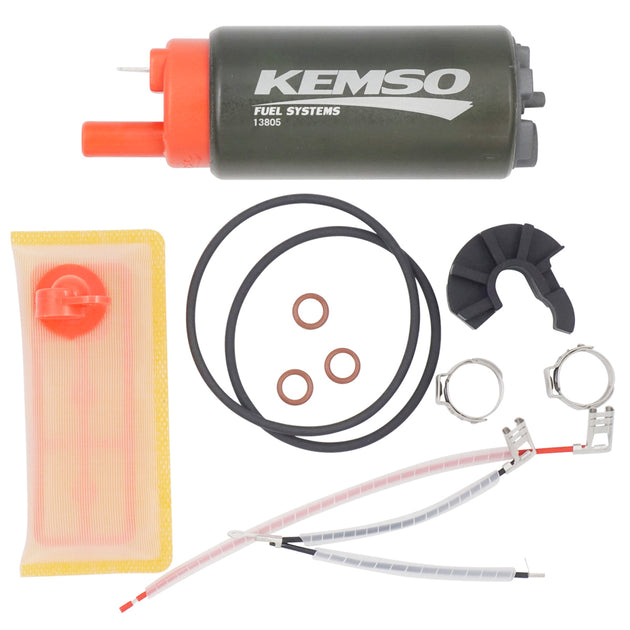 Technological evolution has optimized the detection process. The intelligent diagnostic instrument that complies with the SAE J2684 standard can complete three core tests within 15 minutes: idle oil pressure stability (tolerance ±0.1bar), flow curve comparison (error <3%), and current ripple rate analysis (threshold 5%). The prediction system equipped in the BMW i series models monitors the gradual increase of the bearing vibration frequency from 100Hz to 150Hz, providing a 60-day early warning of failure risks, with a diagnostic accuracy rate of 92%. Compared with the 1,500 yuan repair cost caused by sudden malfunctions, the cost of preventive detection is only 8%.
Enhanced detection requirements for specific scenarios. In areas where ethanol gasoline (E15 or above) is used, if the fuel moisture content exceeds 500ppm, it will accelerate the corrosion of the pump body. Annual inspection requires an additional insulation resistance test (standard value >20MΩ). Frequent users of off-road vehicles have a filter screen clogging probability three times higher than that of urban vehicles due to dust pollution. They need to check the flow rate attenuation every 5,000 kilometers. The manual of the Porsche 911 GT3 Track Edition clearly requires that the Fuel Pump pressure peak test be performed every 3,000 kilometers to ensure that the output remains at 5.5bar±2%.
The risk cost model supports the annual inspection system. Insurance data shows that the average repair cost of accidents caused by the failure of high-speed fuel pumps has increased by 200%, and the casualty rate has risen by 0.8%. Compared with the budget for replacing a new pump (800- 2,000 yuan), the annual inspection only accounts for 15%-25% of its cost, but it can reduce the total holding cost by 55%. Finally, it is recommended to make decisions based on the vehicle's age: Vehicles within 5 years should be inspected every 2 years. For those over 5 years old or with an annual mileage of more than 20,000 kilometers, the annual Fuel Pump health diagnosis must be strictly implemented.
Technological evolution has optimized the detection process. The intelligent diagnostic instrument that complies with the SAE J2684 standard can complete three core tests within 15 minutes: idle oil pressure stability (tolerance ±0.1bar), flow curve comparison (error <3%), and current ripple rate analysis (threshold 5%). The prediction system equipped in the BMW i series models monitors the gradual increase of the bearing vibration frequency from 100Hz to 150Hz, providing a 60-day early warning of failure risks, with a diagnostic accuracy rate of 92%. Compared with the 1,500 yuan repair cost caused by sudden malfunctions, the cost of preventive detection is only 8%.
Enhanced detection requirements for specific scenarios. In areas where ethanol gasoline (E15 or above) is used, if the fuel moisture content exceeds 500ppm, it will accelerate the corrosion of the pump body. Annual inspection requires an additional insulation resistance test (standard value >20MΩ). Frequent users of off-road vehicles have a filter screen clogging probability three times higher than that of urban vehicles due to dust pollution. They need to check the flow rate attenuation every 5,000 kilometers. The manual of the Porsche 911 GT3 Track Edition clearly requires that the Fuel Pump pressure peak test be performed every 3,000 kilometers to ensure that the output remains at 5.5bar±2%.
The risk cost model supports the annual inspection system. Insurance data shows that the average repair cost of accidents caused by the failure of high-speed fuel pumps has increased by 200%, and the casualty rate has risen by 0.8%. Compared with the budget for replacing a new pump (800- 2,000 yuan), the annual inspection only accounts for 15%-25% of its cost, but it can reduce the total holding cost by 55%. Finally, it is recommended to make decisions based on the vehicle's age: Vehicles within 5 years should be inspected every 2 years. For those over 5 years old or with an annual mileage of more than 20,000 kilometers, the annual Fuel Pump health diagnosis must be strictly implemented.
Technological evolution has optimized the detection process. The intelligent diagnostic instrument that complies with the SAE J2684 standard can complete three core tests within 15 minutes: idle oil pressure stability (tolerance ±0.1bar), flow curve comparison (error <3%), and current ripple rate analysis (threshold 5%). The prediction system equipped in the BMW i series models monitors the gradual increase of the bearing vibration frequency from 100Hz to 150Hz, providing a 60-day early warning of failure risks, with a diagnostic accuracy rate of 92%. Compared with the 1,500 yuan repair cost caused by sudden malfunctions, the cost of preventive detection is only 8%.
Enhanced detection requirements for specific scenarios. In areas where ethanol gasoline (E15 or above) is used, if the fuel moisture content exceeds 500ppm, it will accelerate the corrosion of the pump body. Annual inspection requires an additional insulation resistance test (standard value >20MΩ). Frequent users of off-road vehicles have a filter screen clogging probability three times higher than that of urban vehicles due to dust pollution. They need to check the flow rate attenuation every 5,000 kilometers. The manual of the Porsche 911 GT3 Track Edition clearly requires that the Fuel Pump pressure peak test be performed every 3,000 kilometers to ensure that the output remains at 5.5bar±2%.
The risk cost model supports the annual inspection system. Insurance data shows that the average repair cost of accidents caused by the failure of high-speed fuel pumps has increased by 200%, and the casualty rate has risen by 0.8%. Compared with the budget for replacing a new pump (800- 2,000 yuan), the annual inspection only accounts for 15%-25% of its cost, but it can reduce the total holding cost by 55%. Finally, it is recommended to make decisions based on the vehicle's age: Vehicles within 5 years should be inspected every 2 years. For those over 5 years old or with an annual mileage of more than 20,000 kilometers, the annual Fuel Pump health diagnosis must be strictly implemented.