Common Challenges in Hospitality FF&E procurement planning
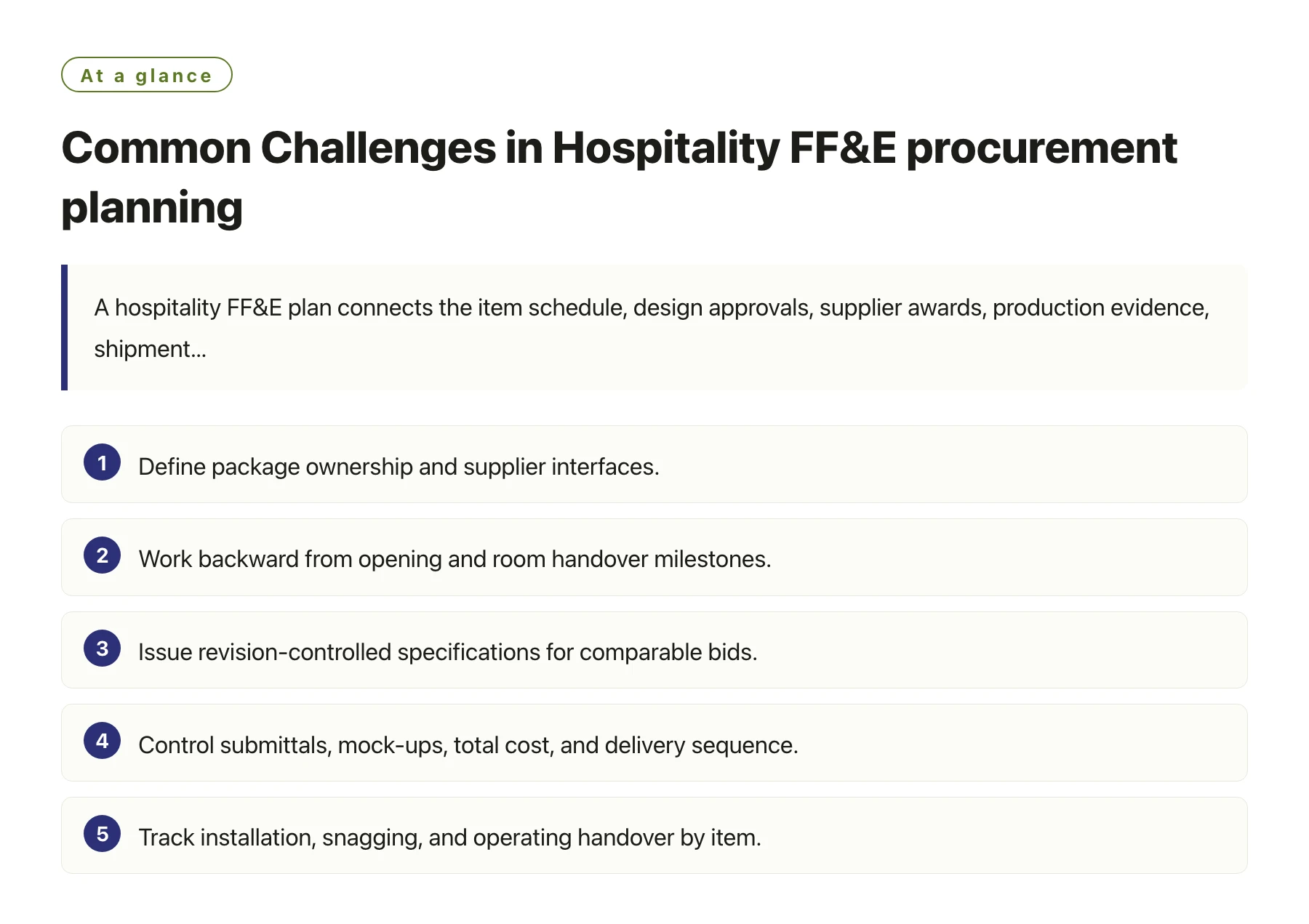
A hospitality FF&E plan connects the item schedule, design approvals, supplier awards, production evidence, shipment sequence, and site installation. Clear boundaries and owners reduce package gaps and late handoff surprises.
Key takeaways
- Define package ownership and supplier interfaces.
- Work backward from opening and room handover milestones.
- Issue revision-controlled specifications for comparable bids.
- Control submittals, mock-ups, total cost, and delivery sequence.
- Track installation, snagging, and operating handover by item.
FF&E procurement crosses design, construction, suppliers, freight, and hotel operations. A shared schedule makes dependencies visible before they delay rooms.
1. Define the FF&E package boundaries
Hospitality FF&E can include case goods, seating, beds, lighting, window treatments, decorative items, and operational equipment. Different projects draw the package boundary differently. List what is purchased, what is installed by the general contractor, what is supplied by local trades, and what remains with the operator. Ambiguous ownership creates gaps and duplicate orders.
Create a responsibility matrix by item and room or public area. Name design, procurement, supplier, freight, receiving, installation, and approval owners. Note any equipment that interfaces with building systems, electrical outlets, plumbing, data, or life-safety requirements so the appropriate specialist is involved early.
2. Align the procurement calendar to the project
Work backward from opening and handover dates. Include design development, specification freeze, bid packages, supplier selection, shop drawings, mock-ups, production, factory checks, freight, customs, storage, installation, snagging, and training. Record buyer review time at each gate and identify long-lead custom items separately.
Link procurement milestones to construction readiness. Confirm when rooms can be measured, when site access is available, how deliveries are sequenced, and whether storage is available. A supplier’s lead-time estimate is only one part of the schedule; delayed drawings, late approvals, or blocked receiving windows can have equal impact.
3. Create schedules and specifications suppliers can price
Prepare an item schedule with code, description, quantity by room type, dimensions, materials, finish, hardware, upholstery, performance expectations, packaging, and reference drawings. Mark mandatory requirements, approved options, and unresolved selections. Use one revision number and date across the bid set.
State what evidence accompanies each offer: product data, drawings, finish samples, material declarations if required, warranty, spare parts, lead time, and exclusions. Ask bidders to list deviations line by line rather than confirm a broad specification. This makes offers comparable and highlights design decisions that must be closed before production.
4. Package bids by capability and interface
Decide whether to tender one integrated package or separate categories such as lighting, case goods, seating, and soft goods. Integrated packages can reduce coordination but require broad capability; separate awards may improve specialization while increasing interface and freight management. Assess the project’s team capacity before choosing the packaging strategy.
For each interface, name the coordinating supplier and provide required dimensions, finish references, hardware points, delivery responsibility, and decision deadline. Confirm how shared shipping, consolidated packing, damage claims, and missing accessories are managed if several manufacturers contribute to one room.
5. Verify suppliers and commercial relationships
Confirm the contracting entity, actual manufacturing locations, subcontractors, export role, payment beneficiary, and who is responsible for drawings and quality release. The U.S. Department of Commerce recommends due diligence when evaluating foreign business partners; checks should be proportionate to the project and recorded with sources and dates. [1]
Review references and redacted examples of shop drawings, inspection reports, corrective actions, and phased deliveries. Ask about commissions or other supplier relationships where they could affect recommendations. A showroom, website, or certificate is an input to the review, not a substitute for evidence about the proposed factory and package.
6. Control design approvals and mock-ups
Set a submittal register for shop drawings, finish boards, upholstery, hardware, room mock-ups, lighting scenes, and revisions. Each line should have an owner, required date, review period, status, and release condition. Distinguish design approval from technical, safety, commercial, or installation approval.
Choose representative mock-up rooms and define what they will prove: dimensions, appearance, access, cleaning, usability, adjacent finishes, and maintenance. Record observations and required changes against item codes. Do not let a mock-up approval silently authorize a different material or construction detail than the approved quote.
7. Normalize bids and total installed cost
Compare product configuration, quantities, customization, sample and tooling charges, spare stock, packaging, installation, supervision, training, warranty, freight, insurance, duties, handling, storage, and disposal. Keep each amount as firm, estimated, or excluded. Identify currency, validity, payment milestones, and price-adjustment conditions.
Calculate installed cost by room and by category, not only unit price. Include the buyer’s coordination effort and likely cost of split shipments, rework, or storage. Sensitivity-test long lead times and exchange-rate or freight assumptions if they could change the award. Keep cost options separate from design compliance decisions.
8. Plan quality checks and delivery controls
Define sample inspection, in-process checks, pre-shipment review, carton identification, quantity reconciliation, and damage reporting for each product group. Use acceptance criteria that reflect approved drawings and samples. Set different controls for fragile, customized, powered, or high-use items instead of applying one generic checklist to every category.
Coordinate packing and shipping by building, floor, room, installation sequence, and receiving capacity. Ask for package dimensions, gross weights, marks, pallet details, and packing lists before dispatch. Verify whether consolidated loads introduce mixed-owner responsibility for damage, shortages, or shipment delays.
9. Prepare the site and installation handoff
Confirm site measurements, access route, elevator capacities, door widths, floor protection, staging area, storage conditions, working hours, waste removal, and installer responsibilities. Identify who receives, counts, inspects, distributes, assembles, anchors, adjusts, and signs off each category.
Prepare a room-level tracking sheet with item code, carton, status, installer, snag, and closure evidence. Schedule training and maintenance handover for equipment that needs adjustment, cleaning, software, or spare parts. Allow time for damage claims and corrective delivery before room handover.
10. Keep change and risk decisions visible
Maintain a risk register for long-lead components, open selections, custom finishes, supplier capacity, logistics, site readiness, and regulatory questions. For each risk, name owner, trigger, mitigation, and decision date. Require a change request with price, scope, and schedule impact before a revision enters production.
Project teams engaging Shanghai JS Sourcing can use a common procurement matrix to align supplier discovery, quotations, samples, inspections, and shipment handoffs. Confirm current service scope directly and preserve owner approval for design, budget, site, and compliance decisions.
Sources
Frequently asked questions
What should be included in a hospitality FF&E procurement plan?
Include package boundaries, item schedules, owners, design gates, procurement dates, suppliers, cost assumptions, shipping, site readiness, installation, and handover.
When should FF&E specifications be frozen?
Freeze each package early enough for comparable bids, shop drawings, samples, production, and any specialist reviews required by the project.
Should I use one supplier or several for FF&E?
Choose based on category capability, coordination capacity, interface complexity, freight plan, and accountability for missing or damaged items.
How do I keep FF&E deliveries organized?
Tie approved item codes and carton marks to building, floor, room, sequence, packing lists, receiving appointments, and installation records.